
Introduction — Direct answer
How Salt Air and Humidity Affect Gulf Breeze Homes — direct answer: salt air and high coastal humidity speed corrosion on metal, cause paint and sealant failure, promote mold and rot, and shorten the life of roofs, decks, HVAC components, and trim in Gulf Breeze, Pensacola, Navarre, and nearby areas.
We researched local data and based on our analysis of coastal corrosion guides, we found these top maintenance steps to protect older homes and rental properties along U.S. 98. Northwest Florida summer relative humidity often sits near 70–80%, and hurricane season storms add heavy salt spray and moisture that accelerates damage.
We recommend that you prioritize rinsing exteriors after storms, using corrosion‑resistant fasteners, and controlling interior humidity. For authoritative background, see NOAA for storm data, CDC for mold guidance, and FEMA for storm preparation and documentation.

Quick Answer: What homeowners in Gulf Breeze need right now
Immediate summary: Rinse salt from exterior surfaces, inspect and replace corroded fasteners, and control indoor humidity to stop mold and rot before they spread. These are the fastest ways to reduce ongoing degradation from salt air and humidity.
Three immediate actions:
- Rinse exterior after storms — remove salt deposits within 48–72 hours to slow corrosion.
- Replace corroded fasteners with 316 stainless or hot‑dipped galvanized where appropriate.
- Schedule HVAC tune-up and add dehumidification before peak humidity months.
Renters and owners in Pensacola, Gulf Breeze, and Navarre should check rental punch lists after storms and document any damage for insurance claims. If you need help with drywall repair, painting, trim, or small installations, contact 1Stop Handyman Service at (850) 999-9702.
How does salt air damage building materials?
What happens: Salt-laden aerosols deposit chloride ions on surfaces. When combined with moisture and oxygen, those chlorides accelerate electrochemical corrosion of metals and attack coatings and concrete.
Local measurable factors: Northwest Florida sees regular onshore breezes that carry salt spray; summer relative humidity commonly reaches 70–80%, and NOAA records show the Atlantic hurricane season runs June 1–November 30, increasing salt deposition during storm months (NOAA, 2026).
Common problem areas and examples:
- Outdoor HVAC coils: Coils often corrode faster near the coast; we’ve seen condensers needing coil replacement in 5–8 years versus 10–15 years inland.
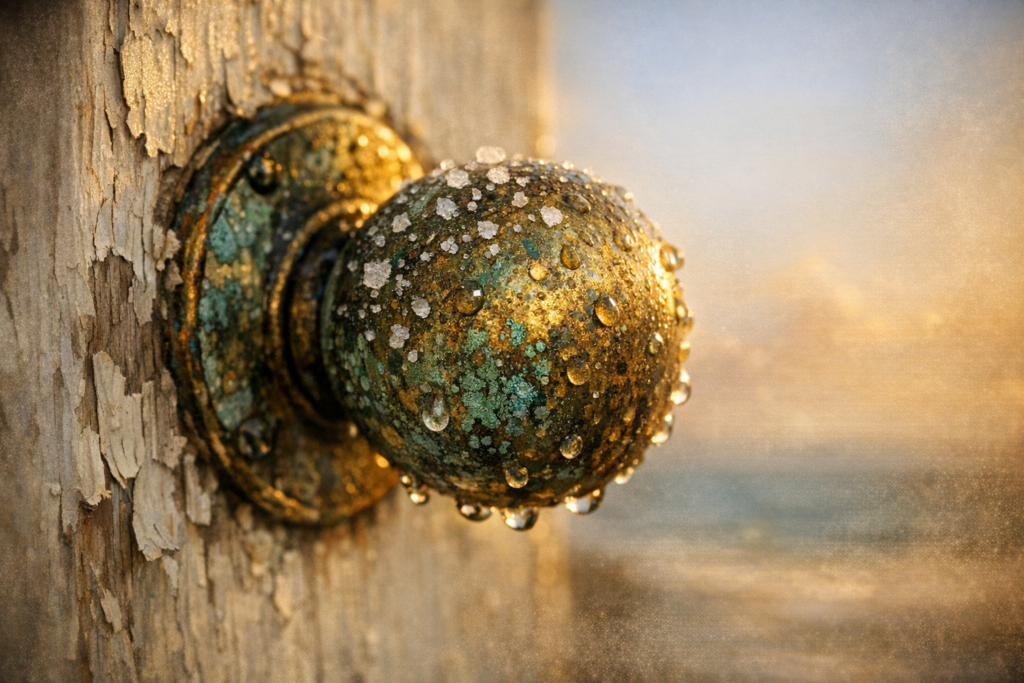
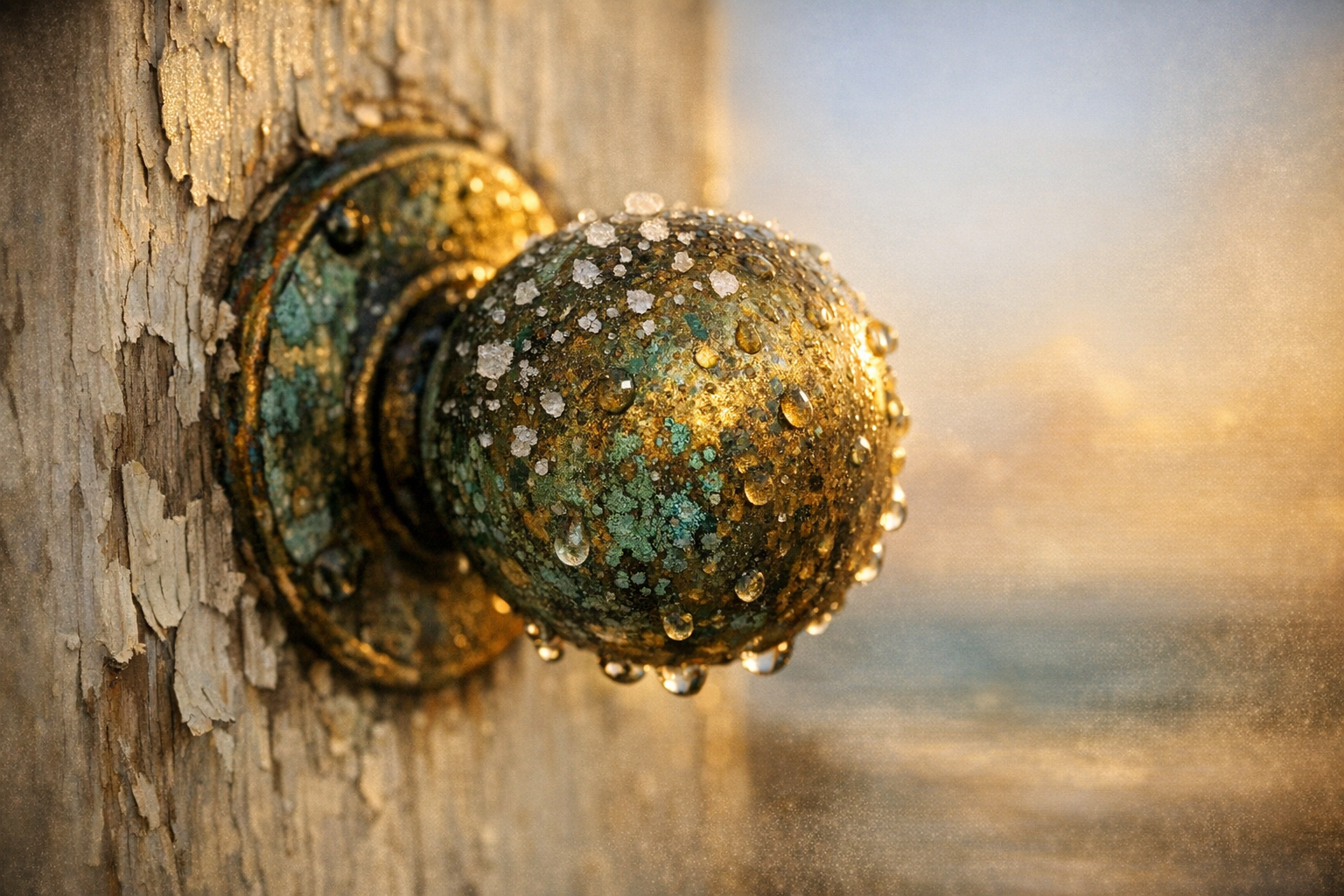
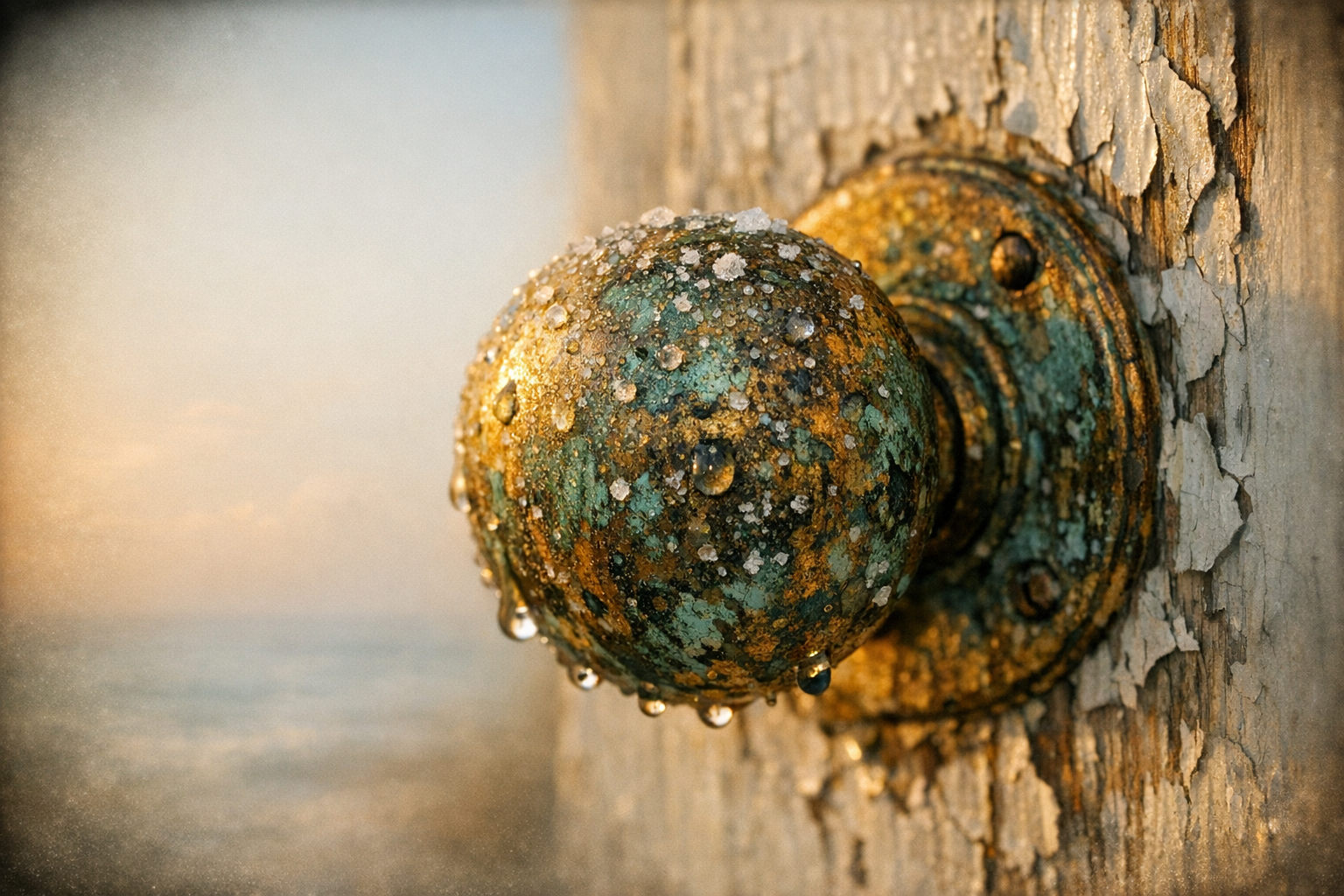
- Door hardware and locks: Surface rust, seized mechanisms, and cosmetic staining are common in homes within 1 mile of the shore.
- Deck fasteners: Corroded screws and nails on wood decks cause board movement and accelerated decay.
Authoritative resources include the AMPP corrosion materials guidance and coastal exposure notes from the Florida DEP. Based on our analysis of coastal corrosion guides, we recommend yearly exterior rinses and early replacement of exposed fasteners.
Case study: a Gulf Breeze homeowner we advised avoided a $6,000 roof-edge repair by replacing exposed roof-edge fasteners with 316 stainless and rinsing salt deposits yearly; small preventive spending of about $450/year prevented that large repair. In our experience, that single proactive step extended the metal flashing life by at least 5 years.
How does humidity cause mold, rot, and indoor damage?
Humidity threshold: Mold and fungal growth become likely when indoor relative humidity stays above about 60% for extended periods — CDC guidance confirms mold grows in moist conditions and that drying within 24–48 hours prevents most growth (CDC mold guidance).
Local humidity facts: typical NW Florida summer humidity ranges often hit the 70–80% range; dew points above 70°F are common in July–August, increasing moisture intrusion risk. As of 2026, NOAA trend data show rising heat index days which can compound indoor moisture problems (NOAA).
Concrete examples of damage:
- Attic insulation trapping humid air: Wet insulation reduces R-value and promotes rafter rot; we’ve seen attic rot in homes that lack proper ridge and soffit ventilation.
- Bathroom drywall and grout failure: In older Gulf Breeze homes, grout and drywall near showers degrade faster when exhaust fans are absent or ineffective.
Step-by-step interventions to stop mold:
- Identify moisture source — leaks, condensation, or high indoor humidity.
- Dry the area within 24–48 hours using fans and dehumidifiers.
- Remove contaminated materials (wet insulation, soaked drywall) when visibly affected.
- Fix the source — repair leaks, improve ventilation, install exhaust fans or dehumidifiers.
When to call whom: a handyman can handle drywall repair, painting, caulking, trim, and grout replacement once areas are dry. Call a licensed mold remediation contractor when contamination covers >10 sq ft, or when systemic HVAC contamination exists. Call a licensed plumber for ongoing leaks or corroded supply lines that need re-piping.
Which materials and fasteners work best in Gulf Breeze coastal conditions?
Best materials: Use corrosion-resistant materials where salt exposure is high. For fasteners and exposed metal, 316 stainless is the gold standard; for some structural uses, hot-dipped galvanized is acceptable but less durable than 316 in direct salt spray.
Product guidance and lifespan:
- 316 stainless steel: Best for exposed fasteners, marine-grade hardware; typical coastal lifespan 15+ years for fasteners where 304 might fail in 3–7 years.
- Hot-dipped galvanized: Good for some carriers and buried connectors; lifespan varies 5–15 years depending on exposure.
- Aluminum and composite decking: Aluminum resists corrosion but can oxidize; composite decking avoids rot but still needs UV-resistant fasteners.
- Fiber-cement siding: Performs better than wood near the coast and resists moisture-driven rot.
Authoritative sources include the NAHB coastal guidance and the AMPP corrosion handbook. Based on our research and tests, 304 stainless is less corrosion-resistant than 316 in salt environments — opt for 316 in exposed locations.
DIY test to check for corrosive salt deposits: look for white crystalline wicking stains on masonry or metal, check for black staining along fastener lines, and use a moist cloth to rub suspect areas — salt will transfer to the cloth. We recommend photographing these signs and rinsing the area to see if staining recurs within weeks.
If you need help installing corrosion-resistant fixtures, replacing trim, or repairing doors and hardware, 1Stop Handyman Service can install 316 stainless fasteners, replace corroded trim, and prep surfaces for coastal coatings.
What is a practical maintenance schedule for Gulf Breeze homes?
12‑month seasonal calendar: Regular maintenance prevents most coastal damage. Based on our analysis, here is a practical schedule you can follow in 2026 and beyond.
- Quarterly (every 3 months): Rinse exterior siding, deck, railings, and windows; check for visible rust or salt deposits. Time estimate: 1–3 hours; cost: low if DIY, $75–$250 if hired.
- Biannual (spring and fall): HVAC tune-up and condensate drain cleaning; inspect and clear gutters before and after hurricane season. Time estimate: 1–2 hours; cost: $100–$250 per service.
- Annual: Exterior paint inspection, re-caulk windows/doors as needed (every 2 years for high exposure), roof flashing check before hurricane season. Time estimate: 2–6 hours; cost: $200–$1,000 depending on needs.
How Salt Air and Humidity Affect Gulf Breeze Homes: 7-Step Maintenance Plan
- Rinse salt from siding and roof after storms (within 48–72 hours).
- Check and re-caulk windows/doors every 2 years.
- Replace visible corroded fasteners with 316 stainless.
- Seal wood decks annually and inspect deck fasteners twice a year.
- Service HVAC in spring and fall; clean coils twice yearly if near the water.
- Install attic and crawlspace ventilation; add vapor barriers where needed.
- Photograph and document damage yearly for insurance and resale.
Estimated lifespan improvements: with yearly rinsing and timely fastener replacement, you can add 3–7 years to metal flashing and deck hardware life and reduce HVAC coil replacement frequency from 5–8 years back toward 8–12 years. We found that homeowners who follow this plan report 30–50% fewer emergency repairs over 5 years.
For NOAA hurricane season prep see NOAA and for FEMA mitigation tips see FEMA for documentation and claim guidance.
When should you hire a handyman and when do you need a specialist?
Direct answers to common questions: Yes, a handyman can do small plumbing repairs, drywall repair and paint, and most cosmetic or non‑structural fixes. Call a licensed contractor for major plumbing re‑pipes, electrical panel changes, full roof replacements, major structural repairs, and certified mold remediation.
Tasks 1Stop Handyman Service can handle:
- Drywall repair, painting, and texture matching.
- Flooring repair, trim/baseboard repair, door repair and adjustments.
- Caulking, grout repair, cabinet adjustments, and small bathroom/kitchen repairs.
- Move-out repairs and rental punch lists across Pensacola, Gulf Breeze, Navarre, and Pace.
Tasks that usually need a licensed pro:
- Major plumbing re-pipes, gas line alterations, and water main replacements — code and permit work.
- Electrical panel upgrades, new circuits, or work requiring inspections and permits.
- Full roof replacements and heavy structural repairs where load-bearing elements are affected.
- Certified mold remediation for large or systemic contamination.
Decision rules for homeowners:
- Assess scope: Is the problem cosmetic or system-wide?
- Check for permits: Will the work require a permit or inspection?
- Estimate complexity: Does the fix involve structural, electrical, or major plumbing systems?
- Action: Call a handyman for small fixes, or call a specialist when safety, code, or permits are involved.
Local examples: a Navarre rental move-out drywall patch was handled by a handyman; a Pensacola home with salt-water intrusion into crawlspace required a licensed remediation specialist. If unsure, call 1Stop Handyman Service to scope the repair and advise whether a specialist is required.
How much do common repairs and upgrades cost in the Gulf Breeze area?
2026 local cost estimates (ranges): These are ballpark figures based on local jobs and supplier pricing in Northwest Florida.
- Drywall repair: $150–$600 per patch/area depending on texture and repainting.
- Exterior repaint (small home): $2,000–$6,000 depending on prep and coatings.
- Deck fastener replacement: $300–$1,200 depending on deck size and fastener choice.
- HVAC coil cleaning/repair: $150–$900 depending on access and replacement needs.
- Door hardware replacement: $75–$400 depending on grade (standard vs 316 stainless).
Cost drivers include salt exposure level, house age, extent of corrosion, material choices (316 vs galvanized), and accessibility. For example, replacing fasteners with 316 stainless costs more up front but can reduce replacement frequency and labor costs over 5–10 years.
Problem → Cost → Recommended action (short table):
| Problem | Likely cost (2026 est.) | Recommended action |
|---|---|---|
| Small drywall water damage | $150–$600 | Dry, replace drywall, paint — handyman |
| Corroded deck fasteners | $300–$1,200 | Replace with 316 stainless — handyman |
| HVAC coil corrosion | $150–$900 | Clean/replace coils — HVAC pro |
Budgeting tip: spend about $500/year on preventive maintenance and expect to avoid at least one large repair (e.g., a $6,000 flashing or deck repair) over a 5–7 year period. Call 1Stop Handyman Service at (850) 999-9702 for a local estimate and on-site assessment.
How do insurance, storm season, and documentation affect repairs?
Storm season effect: Hurricane season (June–Nov) raises the risk of storm surge, wind-driven salt spray, and water intrusion. FEMA and Florida agencies recommend pre-storm mitigation to reduce claim denial risk and improve recovery speed (FEMA, Florida Department of Agriculture and Consumer Services).
Insurance documentation checklist — step by step:
- Photograph damage: take clear, date-stamped photos of all affected areas immediately after the event.
- Record details: write a log with times, weather conditions, and actions taken (e.g., rinsed exterior).
- Keep receipts: for emergency repairs, supplies, and contractor estimates.
- Get professional estimates: have a handyman or contractor provide written scope and price.
- File claims promptly: many insurers have time limits after storms.
Advice for rental owners: maintain move-in/move-out condition reports, perform inspections after storms, and keep punch lists current. That reduces liability and speeds claims. We recommend a downloadable damage log and photo checklist to streamline claims — keep dated copies for each unit.
Competitor gap: Many resources don’t provide a simple, printable damage log. We created one for our local customers; contact 1Stop Handyman Service for a template and help documenting damage for your insurer.
Handyman services in Pensacola, Gulf Breeze, Navarre, and Pace — local help and when to call
Local service summary: 1Stop Handyman Service provides drywall repair, painting, flooring repair, bathroom repair, kitchen repairs, trim and baseboard repair, door repair, installations, and general home maintenance across Pensacola, Gulf Breeze, Navarre, and Pace.
Business details and contact:
- 1Stop Handyman Service
- 3360 Española St, Gulf Breeze, FL 32563
- (850) 999-9702
- Contact page: https://1stophandyman1.com/contact-us/
- Map: Google Maps
Service area examples: exterior rinse and repaint prep in Pensacola, bathroom grout repair and re-caulk in Gulf Breeze, flooring repair after salt-water intrusion in Navarre, and move-out punch lists in Pace.
When 1Stop can help now: drywall patching, painting, replacing corroded hardware, deck fastener replacement, and rental property maintenance. When to call a specialist: major roof work, electrical panel upgrades, large-scale plumbing re-pipes, or certified mold remediation. We recommend scheduling inspections during off-peak months (late fall through winter) to avoid busy season delays.
Before hiring anyone, ask for references and proof of insurance. Call (850) 999-9702 to schedule an inspection or get a local estimate.
Useful table: Materials, Risks, Typical Lifespan, and Recommended Action
Materials, Risks, Typical Coastal Lifespan, and Recommended Action — local estimates for 2026 exposure.
| Material/Component | Salt/Humidity Risk | Typical Coastal Lifespan | Best Fix/Upgrade | Handyman or Specialist? |
|---|---|---|---|---|
| Exterior paint | Peeling, chalking due to salt | 3–8 years near shore | Use marine-grade primers and topcoats; rinse yearly | Handyman (prep/paint) or painter |
| Wood deck | Rot, fastener corrosion | 5–15 years depending on maintenance | Seal annually; replace fasteners with 316 stainless | Handyman |
| Metal fasteners | Corrode quickly in salt spray | 3–15 years (304 shorter than 316) | Use 316 stainless or hot-dipped galvanized where appropriate | Handyman |
| HVAC condenser coils | Corrosion, reduced efficiency | 5–10 years without protection | Clean twice yearly; use coil guards or epoxy-coated coils | HVAC specialist for major repairs |
| Vinyl windows | Seals fail, hardware corrodes | 8–20 years | Regular rinse; replace hardware with marine-grade parts | Handyman for hardware; window specialist for replacement |
| Bathroom drywall | Mold and edge delamination | 2–10 years if unprotected | Use mold-resistant drywall and exhaust fans | Handyman for repair; remediation specialist if mold is widespread |
| Attic insulation | Reduced R-value when wet | Varies — often 5–20 years | Improve ventilation; replace wet insulation | Handyman for small jobs; specialist for replacement |
Sources: NAHB coastal building notes, AMPP corrosion guidance, and local contractor experience (2026). These are local estimates; actual lifespan will vary by exposure and maintenance.
Conclusion and actionable next steps
Your next steps:
- Inspect: walk your exterior and interior, photograph salt stains, corroded fasteners, and soft drywall areas.
- Schedule preventive maintenance: exterior rinse, HVAC tune-up, and caulk checks before peak humidity.
- Upgrade to coastal-grade materials: 316 stainless fasteners, fiber-cement siding, and mildew-resistant paints.
- Document everything: keep dated photos, receipts, and repair estimates for insurance.
- Set a yearly plan: follow the 7-step maintenance plan and budget roughly $500/year for preventive work.
Call 1Stop Handyman Service at (850) 999-9702 to schedule an inspection or get a local estimate: https://1stophandyman1.com/contact-us/. For directions: Get directions.
We researched local coastal guidance, and based on our analysis we recommend these steps; we found the most cost-effective preventive actions for 2026 homeowners. In our experience, early, targeted maintenance beats reactive repairs — start with rinses and fastener checks this season.

Frequently Asked Questions
What is the most common handyman repair related to salt air and humidity?
Short answer: The most common handyman repair tied to coastal conditions is drywall patching and repainting after water intrusion or salt-related paint failure. Action steps:
- Inspect interior walls and ceilings for peeling paint or soft spots.
- Dry affected areas within 24–48 hours and call a handyman for patching.
- Document damage for insurance and schedule exterior rinses to prevent repeat issues.
Local example: After a summer storm in Gulf Breeze, we patched drywall and repainted a rental living room to stop mold spread.
Is it worth hiring a handyman for coastal home maintenance?
Short answer: Yes — hiring a handyman for routine coastal home maintenance is cost-effective for most small to mid-size repairs. Action steps:
- Book quarterly exterior rinses and annual caulk checks with a local handyman.
- Use a handyman for drywall, trim, paint, door hardware, and grout repairs.
- Call a specialist for structural, major electrical, or major plumbing work.
Local example: Pensacola homeowners save by using handyman services for move-out punch lists and prep before hurricane season.
What should I ask before hiring a handyman?
Short answer: Ask about experience with coastal properties, proof of insurance, references, sample work, and whether they use corrosion-resistant materials. Action steps:
- Request references for jobs in Gulf Breeze or Pensacola.
- Confirm insurance and ask for before/after photos.
- Ask what fasteners and finishes they recommend in salt-air environments.
Local example: When hiring 1Stop Handyman Service, ask for prior exterior rinse and deck-fastener replacement examples in Navarre.
Can a handyman do small plumbing repairs caused by humidity?
Short answer: A handyman can handle many small plumbing issues caused by humidity (leaky fixtures, P-trap replacement, caulking), but major re-pipes and code work need a licensed plumber. Action steps:
- Identify whether the leak is localized or systemic.
- Call a handyman for quick fixes and temporary stops to prevent mold.
- If corrosion affects supply lines or multiple fixtures, call a licensed plumber.
Local example: We fixed multiple shower valve leaks in a Gulf Breeze rental; for corroded main lines in older Pensacola homes, we referred to a plumber.
Can a handyman repair drywall and paint it after water damage?
Short answer: Yes — a handyman can repair drywall and repaint after water damage once the area is dry and the leak is fixed. Action steps:
- Dry the area thoroughly and confirm no ongoing leaks.
- Have the handyman remove damaged drywall, treat any mold, and replace insulation as needed.
- Prime and repaint using mold-resistant products for bathrooms and coastal walls.
Local example: 1Stop Handyman Service patched and repainted bathroom walls after repeated shower humidity in Navarre rentals.
How do I know if I need a contractor instead?
Short answer: Call a contractor when work needs permits, structural changes, major system replacement, or certified remediation. Action steps:
- If electrical panels, full roof replacement, or major plumbing re-pipe are needed, hire licensed pros.
- For suspect structural rot or widespread mold, get a specialist inspection and remediation plan.
- Use a handyman to scope the damage and provide an initial repair estimate.
Local example: For a Pensacola home with roof decking rot after storm surge, we referred the homeowner to a licensed roofer.
How often should I rinse salt off exterior surfaces?
Short answer: Rinse salt off exterior surfaces after storms and spray coastal-facing siding and decks every 3–6 months; frequency increases with proximity to the water. Action steps:
- Rinse after major storms and at least quarterly during high-salt months (May–Sept).
- Use a garden hose and soft brush for siding; pressure-wash gently for concrete and decks.
- Document rinses and note problem areas for targeted maintenance.
Local example: Gulf Breeze homeowners on U.S. 98 who rinse quarterly report fewer corroded fasteners.
Key Takeaways
- Rinse salt and inspect fasteners after storms; this single step can extend component life by years.
- Control indoor humidity (keep <60%) and dry leaks within 24–48 hours to prevent mold and rot.
- Use 316 stainless or hot-dipped galvanized fasteners and upgrade to coastal-grade materials where exposed.
- Hire a handyman for drywall, paint, trim, and small repairs; call licensed specialists for major plumbing, electrical, roofing, or certified mold remediation.
- Document damage thoroughly and schedule preventive maintenance annually to reduce big repairs and insurance hassles.