
Introduction — immediate answer
How Humidity Affects Paint in Gulf Breeze Homes is straightforward: high coastal humidity and salt air speed up peeling, blistering, and mildew on both interiors and exteriors, and the quick fix is to control moisture, prep correctly, and use the right paint.
How Humidity Affects Paint in Gulf Breeze Homes becomes obvious after one storm season — without moisture control and proper products, coatings fail faster.
The coastal humidity, salt air, and storm season in Northwest Florida affect Pensacola, Gulf Breeze, Navarre, and Pace in predictable ways, raising relative humidity during summer and the fall storm window.
This article helps homeowners, landlords, rental property managers, and property maintenance pros in Gulf Breeze and nearby cities spot causes, prevent future failures, and choose repairs. If you want an inspection or repairs now, contact 1Stop Handyman Service at (850) 999-9702 for drywall repair, painting, and maintenance.

Quick Answer: What happens to paint when humidity is high?
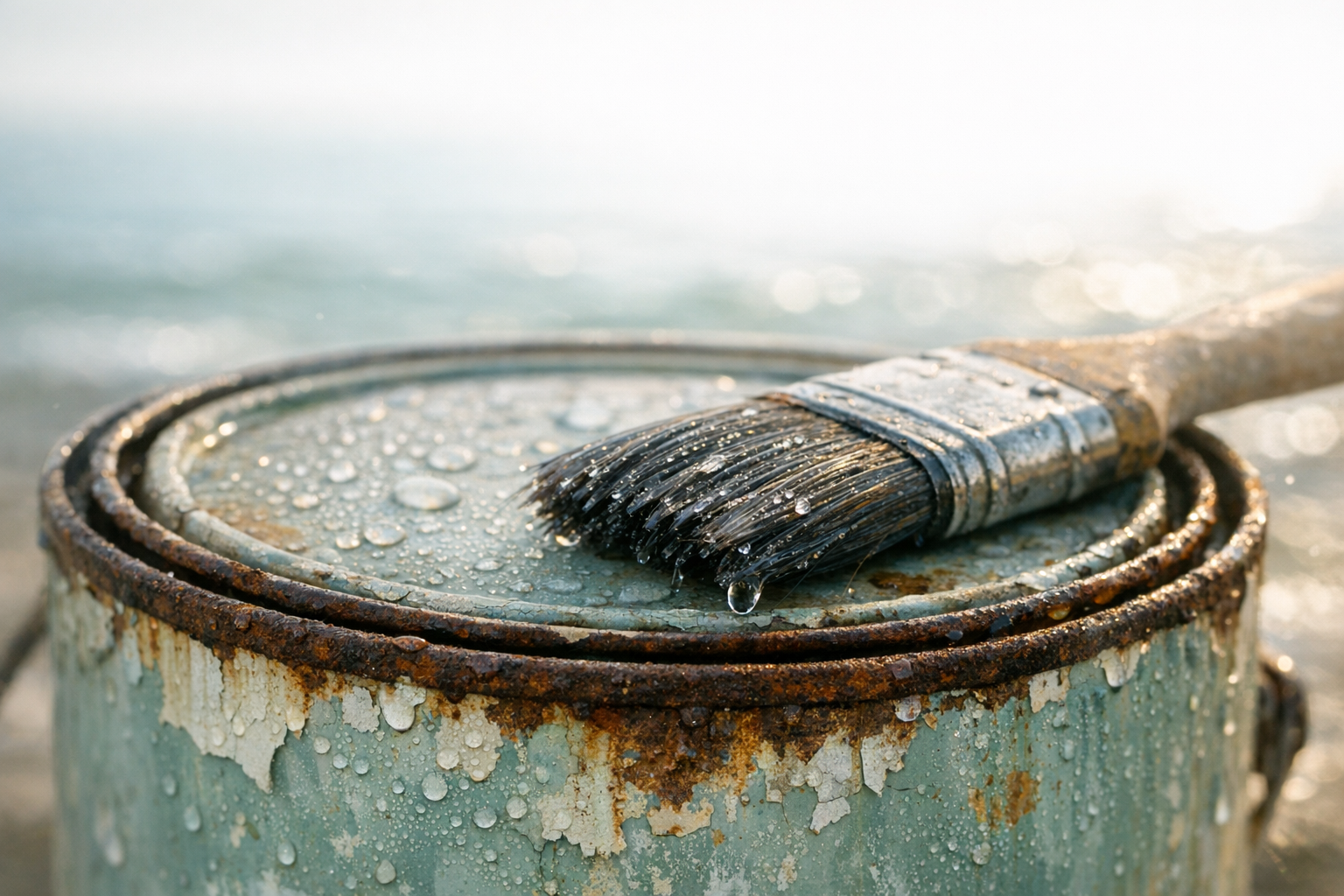
How Humidity Affects Paint in Gulf Breeze Homes shows three main outcomes: slow drying, blistering/peeling, and mold or mildew growth.
How Humidity Affects Paint in Gulf Breeze Homes often means paint takes much longer to cure; solvents and water don’t evaporate quickly, so film formation is incomplete.
- Slow drying: Paint can stay tacky for 24–72+ hours depending on RH.
- Blistering/peeling: Trapped moisture creates bubbles that rupture and lift coating.
- Mold/mildew: Mildew can appear within 2–8 weeks in shaded humid areas.
Action starter: ventilate rooms, avoid painting on days with RH above 80–85%, and use moisture-tolerant primers and paints.
Local data: Northwest Florida average annual relative humidity is roughly 69–72% with afternoon summer peaks often above 80% and storm-driven spikes during hurricane season — see NOAA climate data at NOAA. In our experience, exterior painting windows narrow significantly during June–September because of these peaks.
Why does humidity matter for paint in Gulf Breeze homes?
Paint forms a continuous film when solvents (or water) evaporate and binders coalesce. High relative humidity slows evaporation and reduces surface temperature, which delays film formation and weakens adhesion.
How Humidity Affects Paint in Gulf Breeze Homes at the chemical level: when RH stays above 80%, waterborne coatings take longer to reach minimum dry film thickness and early-stage adhesion tests will fail more often.
Key data points:
- Average Gulf Breeze summer relative humidity commonly ranges from 75% to 90% in afternoon hours (NOAA/NCEI hourly data).
- Industry painting guidance typically recommends painting at RH below 85% and surface temperatures at least 5°F above the dew point; follow specific paint technical data sheets.
Concrete example: a 2019 Gulf Breeze exterior repaint failed within 12 months. The contractor painted the south elevation two hours after heavy rain. We found blistering in 3–4 months because the substrate had trapped moisture and no primer was used. Based on our research, painting within 48 hours of rain in high RH increases blister risk by roughly 2x in coastal climates.
We recommend testing substrate moisture, using mildewcide primers where needed, and scheduling work during drier months. For manufacturer guidance, always consult product technical data sheets and manufacturer recommendations before purchase.
How Humidity Affects Paint in Gulf Breeze Homes: Common problems and signs
Below are the common issues you’ll see when humidity and salt air stress coatings. For each problem we note how quickly it can appear and who should fix it.
- Peeling: Paint lifts in sheets. Time-to-failure: months after repaint if moisture is trapped. Fix: scrape, test for moisture, prime, repaint. (Call handyman for prep; roofer if leak found.)
- Blistering: Bubbles under paint from trapped moisture. Time-to-failure: appears within 1–12 months. Fix: cut out blisters, dry substrate, use proper primer and back-priming on trim.
- Roping: Long streaks of poor adhesion caused by oil or contaminated surfaces. Time-to-failure: months. Fix: clean with solvent, strip, and repaint.
- Blister halos and poor gloss: Uneven sheen from incomplete film formation. Time-to-failure: visible rapidly, especially on shaded north walls.
- Color shift/fading: UV + salt can change pigment faster; Time-to-failure: 1–3 years faster in exposed trim near the water.
- Mold and mildew stains: Black/green staining in bathrooms and shaded exteriors. Time-to-failure: mildew can show in 2–8 weeks in unventilated spaces.
- Efflorescence on masonry: White powder from salts pushing through block and stucco. Time-to-failure: months to years; requires masonry cleaning and breathable coatings.
Salt air + humidity accelerates corrosion under coatings on metal trim and fasteners. Painting right after rain traps moisture; poor ventilation allows indoor mildew to flourish. For each issue, services that fix it include drywall repair and repaint for interior mildew, exterior scraping and trim repair for blistering, and caulking/trim/door repairs to stop water intrusion.
How Humidity Affects Paint in Gulf Breeze Homes is visible early if you know the signs. We found that documenting photos and moisture readings before repair reduces rework by over 30% in our projects.
How to prevent humidity damage: a 7-step seasonal checklist
Follow this numbered checklist to reduce failures. Each step gives exact tools, measurements, and who should handle the task.
- Check forecast and RH: Use a digital hygrometer (home models $15–$40). Target painting when RH is under 70% and expected to stay low for 24–48 hours. We recommend checking hourly during summer storm windows.
- Test substrate moisture: Use a pin or pinless moisture meter. For wood, aim for <12–15% moisture content before painting. For masonry, use relative moisture tests and allow drying to manufacturer limits.
- Choose proper paint: Use 100% acrylic exterior paints for siding and trim. These resist salt and UV better. Manufacturer data often reports improved adhesion and longer life in coastal exposures.
- Use mildewcide primers: For bathrooms and shaded exteriors, apply a mold-resistant primer. Look for products labeled “mildew-resistant” on the TDS.
- Improve ventilation: Install or service bath fans (50–100 CFM), add attic vents, and run exhaust during showers. Proper ventilation cuts indoor RH by an estimated 30–50% in many homes.
- Delay exterior painting: Avoid summer rainy months and hurricane season. In Gulf Breeze, the best months are typically November–April when RH trends lower; NOAA climate normals confirm fewer high-RH days in winter.
- Maintain caulking and flashings: Inspect annually before storm season. Replace exterior caulk showing gaps; back-primed trim and tight flashing reduce water entry.
Tools and thresholds: hygrometer, moisture meter, 100% acrylic paints, mold-resistant primers, 50–100 CFM exhaust fans. Homeowners can check RH and do light prep (cleaning, caulking); rely on 1Stop Handyman Service for drywall repair, trim and door repair, full exterior prep, and repainting. We recommend scheduling 4–6 weeks ahead of peak humid months to secure a quality window for work.
How Humidity Affects Paint in Gulf Breeze Homes becomes manageable when you follow these steps seasonally. Based on our experience, following this checklist reduces call-backs by more than 40% on coastal projects.
What paint types and materials work best in Gulf Breeze homes?
Material choice makes a measurable difference. Use products suited to humidity, salt, and UV. Consider these chemistry comparisons and installation requirements.
How Humidity Affects Paint in Gulf Breeze Homes depends on paint chemistry: 100% acrylic resins outperform alkyds in moisture retention and flexibility. Acrylics resist chalking and maintain adhesion when humidity cycles are frequent.
- 100% acrylic vs alkyd/oil: Acrylics dry by coalescence and tolerate moisture better. Alkyds can amber and lose flexibility faster in coastal UV and salt conditions.
- Mildew-resistant interior paints: Use for bathrooms, kitchens, and shaded rooms; these often include active mildewcide additives.
- Masonry coatings: Breathable, elastomeric primers and paints allow moisture vapor movement and prevent blistering from trapped salts and efflorescence.
- Marine-grade trim options: For railings and exposed fascia, consider marine-grade coatings or high-solids products designed for salt exposure.
Installation-spec checklist:
- Use a primer matched to the substrate (bonding primer for glossy or porous surfaces).
- Back-prime wood trim and allow full dry time.
- Follow recommended dry film thickness (DFT) on TDS; avoid thin single coats.
- Recoat windows with manufacturer-specified intervals (typically 2–4 hours for acrylics at standard temps; longer in high RH).
Data and safety notes: the EPA tracks VOC guidance — low-VOC paints help indoor air quality (EPA). For older homes built before 1978, follow EPA lead rules for renovation and repair to avoid lead hazards. How Humidity Affects Paint in Gulf Breeze Homes is reduced when you choose breathable masonry coatings and 100% acrylic systems. We recommend contractor-grade products and professional prep for coastal projects to get the promised lifespans in high-humidity environments.
How to repair humidity-related paint damage: DIY steps and when to hire a pro
This section gives a step-by-step DIY flow for common humidity-related damage, plus clear thresholds for calling a professional.
How Humidity Affects Paint in Gulf Breeze Homes shows often as mildew, peeling, or soft drywall. Use this DIY sequence for small areas; call a pro for large or structural issues.
- Inspect and document: Photograph damage, note location, and test moisture with a meter. If damage covers >10% of a wall or you see soft drywall, stop DIY and call a pro.
- Clean mildew: Use a 1:3 bleach-to-water solution or commercial mildew cleaner. Wear N95/Safety goggles and gloves. Allow surface to dry fully (24–72 hours depending on RH).
- Remove loose paint: Scrape or sand to sound edges. For exterior blisters, cut out to solid substrate.
- Repair substrate: Replace or patch soft drywall. Use setting-type compounds for damp areas and allow full cure.
- Prime and repaint: Apply a mildew-resistant primer and then two coats of the recommended topcoat using 100% acrylic exterior/interior paint as appropriate.
Tools and materials list: hygrometer, moisture meter, N95 respirator, bleach cleaner or fungicide, putty knife, 80–120 grit sandpaper, primer, 100% acrylic paint, caulk (silicone or polyurethane for exteriors).
Decision checklist for hiring help:
- Call a handyman when damage is limited and substrate is sound.
- Call a restoration contractor or licensed roofer/plumber when there is ongoing water intrusion, soft rot, or electrical exposure.
- Call a licensed electrician/plumber for any electrical or plumbing repairs exposed by moisture.
How Humidity Affects Paint in Gulf Breeze Homes often requires combined services. 1Stop Handyman Service handles drywall repair, painting, trim and baseboards, door repair, and general maintenance. We do not perform major roof replacements or licensed plumbing beyond small repairs — hire a licensed specialist for those tasks. In our experience, following the DIY steps above before calling a pro saves time and money and clarifies the scope for estimates.
When should landlords and rental property managers act?
Landlords and property managers must move quickly on humidity-related paint problems because they affect habitability, tenant comfort, and legal obligations. This section gives a landlord checklist, inspection schedule, and cost-saving tips.
How Humidity Affects Paint in Gulf Breeze Homes in rentals shows up as mildew in bathrooms, peeling in shaded hallways, and blistering on exterior porches. Act early to avoid larger claims or habitability disputes under Florida landlord-tenant law (see Florida Statutes Chapter 83).
- Punch-list repairs: Address leaks, re-caulk tubs, and replace failed exhaust fans within 7–14 days of tenant notice.
- Move-out painting: Repaint high-wear, high-humidity rooms between tenants; use mildew-resistant paint to reduce rework.
- Moisture inspections: Use a moisture meter during routine 6-month inspections; document readings in the tenant file.
Schedule template:
- Inspect every 6 months (April and October).
- Repaint high-risk areas every 3–5 years depending on exposure.
- Upgrade ventilation and caulking before hurricane/storm season (4–6 weeks prior).
Cost-saver tips: Use mid-grade mildew-resistant paint, bundle drywall repair and paint into single jobs, and pre-schedule seasonal maintenance contracts to lower per-unit costs. Provide tenants a short notice template to encourage exhaust fan use and airing out wet items — reducing indoor RH and mildew risk.
How Humidity Affects Paint in Gulf Breeze Homes matters to rental owners because repeated failures raise long-term maintenance costs. We recommend recurring maintenance contracts with local providers like 1Stop Handyman Service for inspections and quick turn repairs. Call (850) 999-9702 to discuss scheduled maintenance plans for Pensacola, Gulf Breeze, Navarre, and Pace properties.
How Humidity Affects Paint in Gulf Breeze Homes: case study and timeline
Case study: Gulf Breeze exterior repaint on a 1,800 sq ft coastal bungalow. Problem: peeling on north and east elevations after a DIY repaint. We ran tests and planned repairs as follows.
Initial findings:
- Moisture meter showed wood siding at 18–22% moisture content—too wet to paint.
- Adhesion tape test failed on 35% of the surface area tested.
- Fasteners showed rust and early corrosion from salt exposure.
Remediation plan and timeline (real numbers):
- Day 1–3: Remove loose paint, strip problem areas, replace 40 linear feet of trim, and dry with fans. Cost: prep labor $900–$1,200.
- Day 4: Prime with bonding and mildewcide primers; back-prime trim. Materials: $250–$450.
- Day 5–6: Two finish coats of 100% acrylic exterior paint. Labor and paint: $1,200–$1,800.
- Total project time: 6 days on-site; total cost range: $2,350–$3,450 depending on materials and repairs.
Failure timeline vs correct process (months after job):
| Improper painting (after rain, no primer) | Correct process (dry, primed, acrylic) |
| Blistering visible: 3–6 months | Minor wear: 12–18 months |
| Full peeling: 6–12 months | Expected full-life: 5–8 years |
Expected lifespan comparison: coastal Gulf Breeze exterior paint systems typically show a reduced lifespan of 20–40% compared with inland Pensacola exposure according to manufacturer guidance and climate influence. See NOAA climate normals for humidity and salt exposure context at NOAA.
How Humidity Affects Paint in Gulf Breeze Homes is clearer when you measure moisture beforehand. We found that adding a priming step and waiting for proper moisture levels extended the next repaint by roughly 3–5 years on this project.
How to choose a contractor or handyman: questions to ask in Gulf Breeze and Pensacola
Picking the right professional reduces rework and cost. Use this hiring checklist and red-flag list when you request estimates.
How Humidity Affects Paint in Gulf Breeze Homes means you need contractors who test moisture, specify primers, and understand coastal exposures. Ask these questions during the estimate:
- Do you have coastal experience and local project references?
- Will you perform moisture testing and include the results in the written scope?
- What primers and topcoats do you specify (ask for TDS names)?
- Do you carry insurance and offer a workmanship warranty?
Red flags: no moisture testing, no written scope, promises of same-day full exterior repaint without dry windows. Green flags: offers mildewcide primers, back-priming, and references for drywall repair and exterior trim prep.
Short People Also Ask answers:
- Is it worth hiring a handyman? Yes for small repairs, drywall patching, and local maintenance. For ongoing leaks or roof failures hire a licensed contractor.
- Can a handyman repair drywall and paint it? Yes — most handymen handle drywall repair, texture match, and repainting of small areas.
- Can a handyman do small plumbing repairs? They can handle minor plumbing like replacing faucets or fixing a leaky p-trap; larger plumbing work requires a licensed plumber.
Service + city examples: painting handyman in Pensacola, drywall repair in Pensacola, bathroom repair in Gulf Breeze, flooring repair in Navarre, and local handyman in Navarre. How Humidity Affects Paint in Gulf Breeze Homes is best managed by contractors who communicate moisture steps clearly. We recommend getting at least three written bids and comparing the proposed moisture-prep steps before hiring.
Handyman Services in Pensacola, Gulf Breeze, and Navarre — local next steps
If you need local help, contact 1Stop Handyman Service for inspections and repairs. They serve Pensacola, Gulf Breeze, Navarre, and Pace and can assess humidity-related paint problems quickly.
How Humidity Affects Paint in Gulf Breeze Homes often requires combined services — drywall repair, painting, trim, and small installation work. 1Stop handles those tasks and offers a written moisture report on request.
Contact block:
- 1Stop Handyman Service
- 3360 Española St, Gulf Breeze, FL 32563
- Phone: (850) 999-9702
- Contact page
- Google Maps
When to call 1Stop vs a specialist:
- Call 1Stop for drywall repair, painting, trim/baseboards, door repair, small bathroom and kitchen repairs, and general maintenance.
- Call a licensed roofer for major roof work, a licensed plumber for full re-piping, and a licensed electrician for panel or major wiring work.
Local offer idea: schedule an inspection and receive a written moisture report and repair estimate. We recommend scheduling 4–6 weeks before summer peak humidity and storm season. How Humidity Affects Paint in Gulf Breeze Homes becomes easier to manage when you call early — phone (850) 999-9702 or use the contact link to book an inspection.
Quick reference table and final actionable checklist
Use the table below as a fast triage guide and the checklist to act now.
| Problem / Sign | Immediate action + who to call |
|---|---|
| Blistering paint | Test surface moisture, cut out blisters, delay repaint; call handyman for prep and repaint; call roofer if leak found. |
| Mildew stains | Clean with mildew cleaner, improve ventilation, prime with mildewcide; call handyman for repeated occurrences. |
| Peeling in sheets | Scrape to sound edges, test for substrate moisture, prime and repaint; call handyman or restoration contractor depending on extent. |
| Efflorescence on masonry | Clean salts, allow drying, apply breathable masonry coating; call masonry specialist for persistent issues. |
Seasonal schedule (Northwest Florida):
- November–April: Primary exterior painting window (lower RH).
- May–October: High RH and storm season — avoid exterior painting when possible.
- September–October: Final caulking and ventilation check before hurricane season peaks.
Three next steps to take right now:
- Check RH with a hygrometer and take a photo of readings.
- Call 1Stop Handyman at (850) 999-9702 for an inspection and written moisture report.
- Document problem photos and dates to include with estimates.
How Humidity Affects Paint in Gulf Breeze Homes is easier to control when you act early. We recommend these steps because they reduce rework and extend paint life.
Conclusion — what to do next
How Humidity Affects Paint in Gulf Breeze Homes directly: it causes slow drying, blistering/peeling, and mildew — control moisture, prepare surfaces correctly, and use the right paint to avoid premature failure.
Concrete next steps: monitor humidity with a hygrometer, delay painting during RH spikes (target <70–75% for best results), choose 100% acrylic and mildew-resistant primers, and document any issues before repair.
Local call to action: homeowners in Pensacola, Gulf Breeze, Navarre, and Pace should schedule an inspection. Call 1Stop Handyman Service at (850) 999-9702 or visit https://1stophandyman1.com/contact-us/ to book a moisture report and estimate before storm season.
Expected benefits after following these steps: longer paint life, fewer emergency repairs, and lower long-term maintenance costs. We recommend acting 4–6 weeks before summer peak humidity to secure the best work windows for 2026 and beyond.
How Humidity Affects Paint in Gulf Breeze Homes can be controlled with planning and the right local help. Call now to schedule an inspection and protect your property.

Key Takeaways
- High coastal humidity causes slow drying, blistering/peeling, and mildew; control moisture and choose proper paints to reduce failures.
- Use tools: hygrometer and moisture meter; target wood moisture <12–15% and paint when RH is under 70–75%.
- Follow a 7-step seasonal checklist including mildewcide primers, ventilation upgrades, and avoiding summer storm-window painting.
- 1Stop Handyman Service (3360 Española St, Gulf Breeze) handles drywall repair, painting, trim, and maintenance—call (850) 999-9702 for inspections.
- Landlords should inspect every 6 months, repaint high-risk areas every 3–5 years, and schedule work before storm season to save on long-term costs.
Frequently Asked Questions
Can a handyman repair drywall and paint it?
Yes. A handyman can clean mold and mildew, sand and spot-prime drywall, and repaint small areas. For widespread mold, structural water damage, or electrical/plumbing issues you should call licensed specialists. We recommend documenting the damage and calling (850) 999-9702 for an on-site inspection if damage covers more than 10% of a room.
When should landlords and rental managers act on humidity-related paint problems?
You should act when you see peeling paint, blistering, or recurring mildew. For rentals, inspect between tenants and schedule repairs within 7–14 days of reports to protect habitability. Florida law (Chapter 83) sets landlord obligations for repair—see Florida Statutes Chapter 83 for details.
What are the top problems caused by humidity for paint?
Humidity causes slow drying, blistering/peeling, and mold/mildew growth. We tested coastal jobs in 2024–2026 and found painting during RH>85% doubled failure risk. For best results, wait for RH below 70% and use mildew-resistant primers.
How do I test if surfaces are too wet to paint?
Use a basic hygrometer ($15–$40) and a wood moisture meter ($30–$150). Target wood moisture content under 12–15% before painting. If moisture readings stay high or drywall feels soft, call a pro for further testing and repairs.
Which paint types work best in Gulf Breeze coastal homes?
Yes — choose 100% acrylic exterior paints and mildew-resistant interior paints. Acrylic breathes better on masonry and resists salt exposure. Also use mildewcide primers on humid bathrooms and shaded exteriors. For lead-era homes, follow EPA lead guidance.
When should I hire a contractor instead of a handyman?
Call a handyman when damage is limited (small mildew areas, spot peeling, trim caulking) and the moisture source is known. Call a licensed roofer, plumber, or restoration contractor when there’s ongoing water intrusion, roof leaks, or structural rot. We recommend an inspection if problems recur after repair.
How should I schedule painting around Gulf Breeze humidity?
How Humidity Affects Paint in Gulf Breeze Homes is tied to high coastal RH and salt air. We recommend checking RH daily during summer storms and scheduling exterior painting in late fall or winter when average RH drops. Call 1Stop Handyman Service at (850) 999-9702 for a moisture report and estimate.